




Personal protective equipment PPE
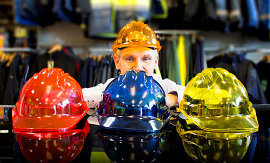
Personal protective equipment (PPE) can be used to protect people against health and safety risks.
Personal protective equipment might include:
- Eye protection.
- Face covering.
- Gloves.
- Harnesses.
- Hearing protection.
- High-visibility clothing.
- Protective clothing.
- Respiratory equipment.
- Safety footwear.
- Safety helmets.
The Personal Protective Equipment at Work Regulations 1992 control the use of PPE at work, other than respiratory equipment, cycle helmets and crash helmets which are covered by other regulations.
Employers are responsible for providing personal protective equipment in the workplace free of charge, however, it should be used only as a last resort, when exposure to risks cannot be adequately controlled in other ways.
If it is not used, or if it fails PPE, does not provide protection and so it is important to ensure that PPE is:
- Assessed to ensure it offers the right level of protection.
- Suitable for the conditions and duration of use.
- Does not interfere with the job.
- Does not introduce another risk (such as heat stress or inability to communicate).
- Maintained, cleaned, stored and replaced properly, with responsibility for these activities clearly allocated and understood.
- Checked for defects.
- Provided with instructions and training.
- Used correctly.
- ‘CE’ marked and compliant with the requirements of the Personal Protective Equipment Regulations.
- The correct size, fit and weight.
- Easy to adjust.
- Comfortable – if possible let the user choose it.
- Compatible with other items.
- Checked to ensure it remains suitable when the job changes.
On 6 April 2022 the Personal Protective Equipment at Work (Amendment) Regulations 2022 (PPER 2022) came into force and amended the 1992 Regulations (PPER 1992).
Under PPER 2022, the types of duties and responsibilities on employers and employees under PPER 1992 will remain unchanged but will extend to limb (b) workers, as defined in PPER 2022. Limb (b) workers are workers who carry out casual or irregular work for one or a number of organisations.
Prior to the adoption of PPER 2022, these workers were required to provide their own PPE. Under PPER 2022, if a risk assessment indicates a worker requires PPE to carry out their work activities, the employer must carry out a PPE suitability assessment and provide the PPE free of charge as they do for employees. The employer will be responsible for the maintenance, storage and replacement of any PPE they provide, while workers will be required to report loss and defects in the PPE which is provided, use the PPE in accordance with the training and instruction provided, and ensure PPE is returned to the accommodation provided by the employer.
Updated guidance is available here: https://www.hse.gov.uk/ppe/index.htm
See also: PPE regulations 2022.
[edit] Related articles on Designing Buildings
- Achieve safety in demolition.
- Asbestos.
- CDM.
- Cold stress.
- Construction dust.
- COSHH.
- Deleterious materials.
- Demolition.
- Dynamic self-retracting lanyard.
- Face coverings.
- Filtering facepieces.
- First aider.
- Fit testing.
- Getting personal about protective equipment.
- Hazardous substances.
- Health and safety.
- Heat stress.
- Hi-vis clothing.
- How to keep workers safe around machinery.
- Method statement.
- New domestic electrical work video.
- Noise at Work Assessment.
- Occupational health.
- Pandemic safety for on-site accommodations.
- PPE regulations 2022.
- Risk assessment.
- Safety briefing.
- Safety helmet colours.
- The Personal Protective Equipment at Work Regulations 1992.
- Toolbox talk.
- Workplace noise exposure estimator.
- Workplace safety supplies.
[edit] External references
- Health and Safety Executive, Personal protective equipment (PPE) at work, A brief guide. 2013.
- The British Safety Industry Federation.
- HSE, Personal protective equipment (PPE) at work regulations from 6 April 2022.
- HSE, Personal Protective Equipment at Work (Second edition). 2005
- The Personal Protective Equipment at Work Regulations. 1992.
- HSE Personal protective equipment (PPE).
- Different types of PPE
Featured articles
Check out some of the best features and news from Designing Buildings as well as key stories from around the web.

The Building Safety Regulator announces a call for evidence.

Government approach could undermine delivery and regeneration.
World's first mass timber data centre.

The overlooked environmental aspect of data centre development.
Introduction to radon awareness

New technical information sheet published by CIOB.

Updated supplier guide can help electrical contractors engage with NHP.

CIAT confirm the winners of the 2026 architectural technology awards.

Government launches a one stop shop for flood preparedness.

Sir Edwin Lutyens: Britain's greatest architect? Book review.

CIOB publishes free template to help assess and manage risks.
ECA's reflections on Party Conference season

Burnham wants to be confident of winning before asking for a fresh mandate.
New Chief Construction and Scientific Adviser

Sergio Cavalaro, Professor of Infrastructure Systems at Loughborough University.
Building safety levy for England

CIAT publish estimator tool for members.